Most Recent News
EXLCUSIVE: Reviving the Economic Soul of Tiv Society: Why Kwav and Ihyumbe Traditional Institutions are the Key to a Future of Socio-Economic Resilience
-
 Chris Yahaya
- May 29, 2026, 2:53 pm
- by Terngu Sylvanus Nomishan, PhD
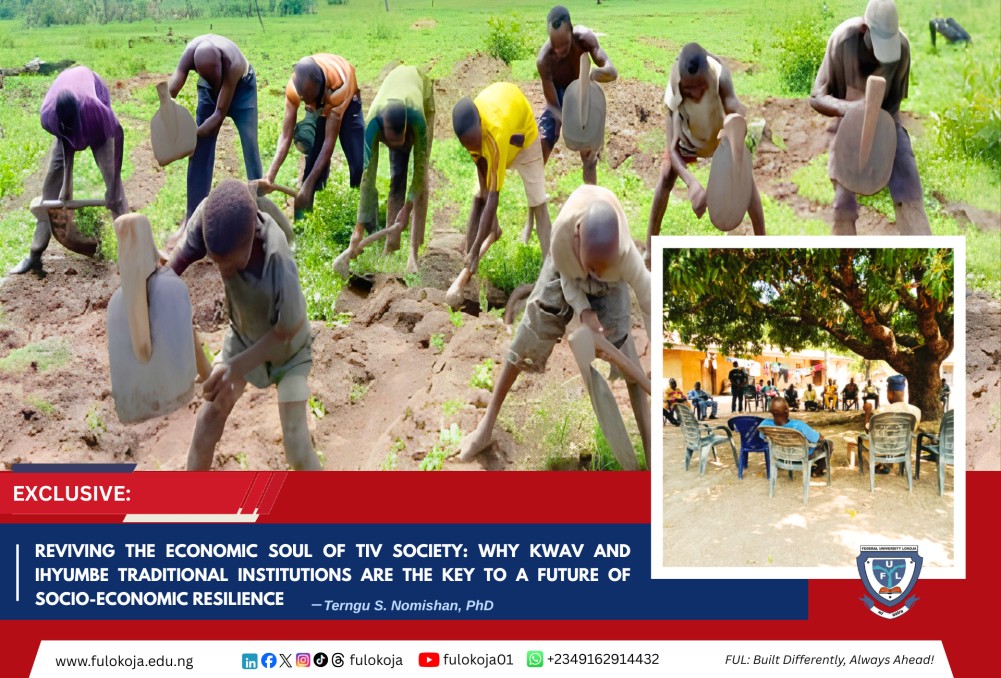
Photo caption: Members of Ihyumbe are actively working on a farm.
This brief communication stems from thorough research conducted on a project titled “Revitalisation of Ihyumbe and Kwav as Instruments for Cultural Heritage Protection and Socio-Economic Development among the Tiv People of Central Nigeria”. The project is being sponsored by the Council for the Development of Social Science Research in Africa (CODESRIA) through the African Fellowships for Research in Indigenous and Alternative Knowledges (AFRIAK). This project is funded by the Mastercard Foundation. The AFRIAK programme was inaugurated in November 2024 and commenced in September 2025, with the first cohort of fellows being introduced in Kigali, Rwanda. AFRIAK is a programme for research, learning, and mentorship aimed at fostering a new generation of African researchers and practitioners who collaborate with Indigenous knowledge custodians to create transformative ideas, solutions, and pathways for the future of Africa. The Fellowship draws its initial inspiration from and pays tribute to the legacy of Dr. Sulley Gariba, a Ghanaian scholar whose work advocated for Indigenous knowledge and evaluation in Africa. AFRIAK continues its vision by ensuring that African knowledge systems are not only preserved but also actively utilised to drive the continent’s transformation.
In the rolling fertile plains of Central Nigeria, the Tiv people have long been celebrated as the "food basket of the nation”. Yet, beneath the surface of agricultural bounty lies a fading social architecture that once made this prosperity possible. Two ancient pillars of Tiv society, Ihyumbe and Kwav, are today at the centre of a burgeoning movement for cultural heritage protection and socio-economic development. For generations, the Tiv philosophy of “Mom Kohol Mom” (togetherness) was not merely a sentiment; it was a survival strategy. This academic enquiry and grassroots engagement highlight ways in which the decline facing these traditional institutions has continued to manifest in current social fragmentation, economic vulnerability, and the weakening of indigenous knowledge systems that once defined the identity and characterisation of Tiv society.
At the heart of this investigation are two engines of prosperity, which are Ihyumbe and Kwav. To understand the current state of these traditional institutions in the Tiv society, one must understand what they stand for. Thus, more than just a farming arrangement, Ihyumbe is a traditionally structured and reciprocal group labour system. It maintains a rotational operation where community members, typically of the same age group, pool their physical resources to work on each other’s farmlands. By sharing the gruelling energy required for land cultivation and harvesting, Ihyumbe helps members of the group to drastically reduce individual labour burdens, thereby helping to enhance productivity and guarantee food security. The interventions from the Ihyumbe system extend beyond the field. It serves as a "practical learning ground" through which indigenous agricultural knowledge, done with strict adherence to work ethics and communal values, is transmitted from elders to the young generations.
Complementing the Ihyumbe socio-political and economic engine is Kwav, the age-grade grouping system of the Tiv people. In this sense, the Tiv people consider Ihyumbe as the means of pooling together a labour force for community farming activities, while Kwav remains the administrative backbone. Kwav organises individuals into age-based cohorts responsible for the essential role of grassroots governance: executing community development projects, mediating local conflicts, and maintaining social order. Historically, Kwav acted as a powerful pressure group, ensuring that communal norms and values were respected, making sure that no member of the community was left behind.
These traditional institutions have somehow been described by some field participants as the shadow of modernity. This is because, despite their historical relevance, marked by verifiable successes, both institutions have been pushed to the margins. Findings from this study point to “colonial and postcolonial intrusions" that have continued to disrupt these indigenous frameworks. Several factors have been pointed to have contributed to this decline. The introduction of cash-crop economies, Western education, foreign religious practices, and a recent love for individualised political structures has continued to gradually delegitimise traditional governance.
Based on the results obtained through this research, the consequences of this decline are visible today. This is because many members of the communities selected in this study are convinced that the erosion of communal farming practices is linked to increased food insecurity, rising youth unemployment, and the loss of the "moral compass" that once guided Tiv society. This is because many individuals are increasingly replacing the collaborative spirit of Ihyumbe with a "wage-labour" mentality, leaving other members of these communities without financial means, unable to maintain and cultivate their ancestral lands.
Furthermore, religious transformations have played a complex role in the decline of Kwav traditional practices among the Tiv people. While many Tiv people have embraced Christianity, some modern interpretations have labelled traditional age-grade ceremonies or gatherings as “paganism”, leading to a generational disconnection where the youth no longer see these institutions as relevant to their modern lives.
Following the above, this study makes a call for strategic reinvention. The message from elders and researchers alike is clear: revitalisation of these traditional institutions is not about a nostalgic return to the past but a strategic reinvigoration for the future.
As a result of the fieldwork conducted across communities in Gboko, Ushongo, and Vandeikya, informants revealed that where these institutions still breathe, they offer a blueprint for communal unity and sustainable development. For instance, in some Kwande communities, elderly members still uphold Ihyumbe values to maintain social cohesion. The youth were also observed to be upholding these traditional practices and provided testimonies for positive impacts on members of the various communities.
Having established that these practices have continued to be essential to the well-being of the contemporary Tiv society, it has become necessary to call for their revival. In doing this, several key strategies should be adopted:
Formal Recognition: The local, state, and federal governments should consider integrating Kwav structures into modern local government frameworks. This can be done by officially registering these age-grade groups, which can, in turn, enable meaningful collaboration with appropriate NGOs and relevant government agencies to access resources for rural infrastructural projects.
Adaptive Reform: There is a need for a strategic reformation of these traditional institutions, which promises a great alignment with modern best practices. This would, in addition, make sure that the core values of discipline and accountability are given centre stage.
Youth Engagement: In the 21st century, the youth are the lifeline of every successful society. Therefore, creating "Neo-Kwav" associations, such as professional bodies or cooperative societies, which would pool resources together and render similar services to the Tiv society, like the age-grade system, can help to address contemporary challenges like drug addiction and urban migration.
Thus, the revitalisation of Ihyumbe and Kwav presents benefits that are far more than just preserving cultural heritage; it is about reclaiming the Tiv agency. When a community mobilises its own labour through Ihyumbe and regulates its own peace through Kwav, it reduces its dependence on an often-distant state apparatus.
In the words of several community informants, these institutions represent the "philosophy of interdependence”. In an era of global economic instability and climate change, the ability of a community to trust one another, share labour, and protect their cultural heritage may be their most valuable asset.
As Tivland looks toward the middle of the 21st century, the path forward may well be found by looking backwards, reigniting the communal fires of Ihyumbe and Kwav to build a society that is not only economically prosperous but culturally resilient.
This paper is written by:
Dr. Terngu Sylvanus Nomishan
Department of Archaeology and Museum Studies,
Federal University Lokoja, Kogi State, Nigeria.
CODESRIA AFRIAK Fellow
Latest News
-
PFN Honours FUL Vice Chancellor as Ibileye Calls for Knowledge, Skill, Grace in Pursuit of Greatness
July 19, 2026, 2:30 pm -
Verify Before You Act: FUL Unveils Hotlines to Curb Misinformation, Online Scam
July 18, 2026, 8:18 pm -
World PR Day 2026: Federal University Lokoja Celebrates The Golden Age Of Strategic Public Relations
July 15, 2026, 9:30 am -
Ibileye Reaffirms Commitment to Corps Members' Welfare, Career Growth at 2026 NYSC Employers' Workshop
July 14, 2026, 8:19 pm -
VC Courts Enduring Partnership with Media Icon Eugenia Abu, Envisions Centre of Excellence at FUL
July 13, 2026, 1:24 pm -
FUL Visits CUSTECH Osara, Explores Innovative Approaches to Campus Safety
July 11, 2026, 7:14 pm -
FUL Inducts Pioneer Clinical Students at Historic White Coat Ceremony
July 10, 2026, 9:34 pm -
Eugenia Abu Charges FUL Students to Design Future with Purpose at Special Public Lecture
July 10, 2026, 6:30 pm